DEPT. OF MATERIALS SCIENCE & ENGINEERING
Center for Advanced Electrochemistry
Interfaces to Interphases Evolution Engineering Electrochemical Systems-from Atomic Scale to Device Level
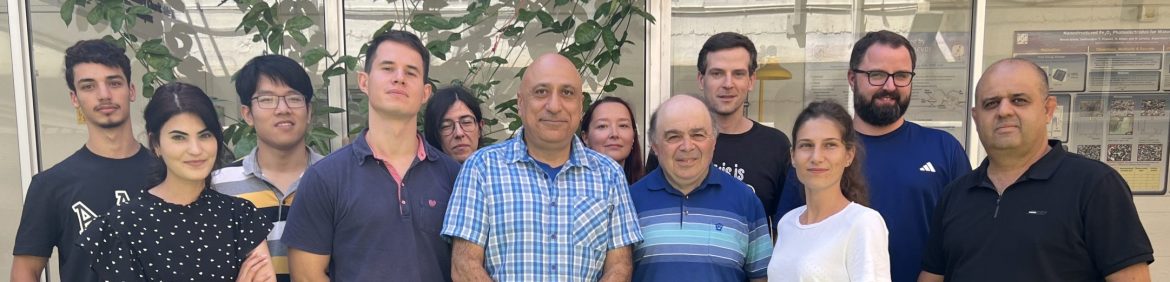
The Center for Advanced Electrochemistry (CAE) at the Technion-Israel Institute of Technology investigates the fundamental science governing electrochemical interfaces and translates this knowledge into interphases engineering, and advanced materials for sustainable energy systems.
Our research is built upon a simple scientific premise:
Electrochemical systems are ultimately governed by Interfaces and Interphases Controlling (2I's²C) performances.
Whether in rechargeable batteries, fuel cells, corrosion processes, electroplating, electrocatalysis, or electrochemical synthesis, 2I's²C determine performance, durability, efficiency, and...failure. 2I's²C approach focuses on the formation, evolution, functionality and molecular engineering of these boundary layers. Understanding these phenomena, and learning how to deliberately engineer them, constitutes the core subject of our research.
Over the past three decades, our laboratory has developed internationally recognized expertise spanning electrochemical energy storage, electrodeposition, corrosion science, artificial interphase engineering, atomic and molecular layers deposition (ALD/MLD), operando characterization, and advanced electrochemical diagnostics. Our work combines electrochemistry, materials science, surface engineering, and molecular design to reveal the mechanisms governing electrochemical systems across multiple length and time scales.
Current research activities of CAE include:
• Studies of interfaces and interphases in rechargeable batteries.
• Artificial interface engineering using ALD and MLD.
• Solid-state and liquid-electrode energy-storage systems.
• Metal-air, Li-ion, Na-ion, Mg-ion and other emerging battery technologies.
• Corrosion science and surface protection.
• Electrodeposition and electrochemical surface modification.
• Operando characterization of electrochemical processes.
• Data-driven electrochemistry and electro-chemo-informatics.
Our vision extends beyond the development of better materials. We seek to establish the fundamental principles controlling electrochemical interfaces and to translate this understanding into designing the next generation of electrochemical technologies.
Our mission is to:
- advance the fundamental science of electrochemical interfaces and interphases;
- educate the next generation of electrochemists and materials scientists;
- develop transformative materials and concepts for sustainable energy technologies;
- foster close collaborations (with academia, industry, and stake holders via innovation.